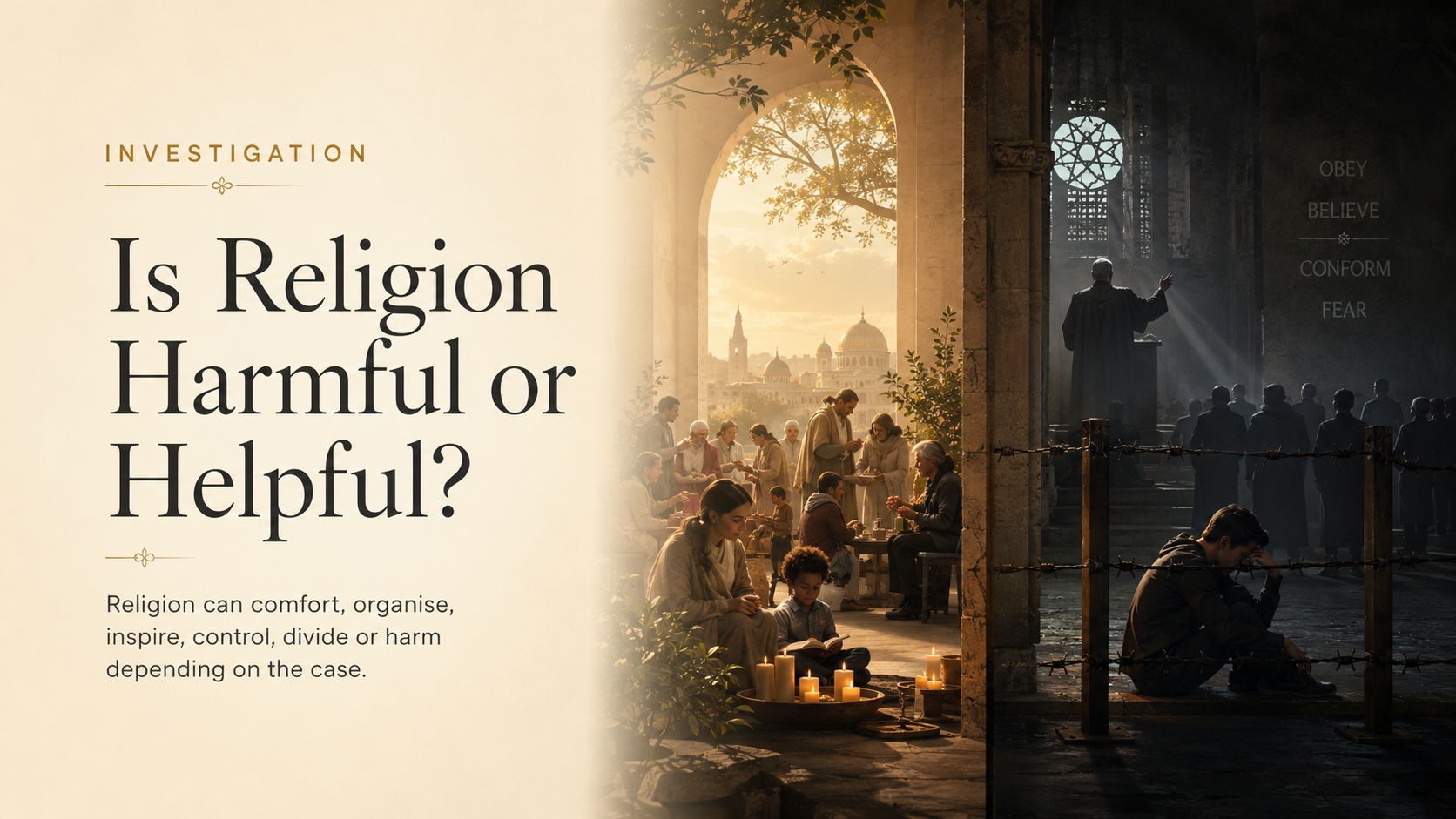
Religion is not one thing. It can provide comfort, ritual, identity, community, charity, discipline and meaning. It can also support fear, exclusion, obedience, guilt, violence, misinformation or control.
The question is not whether religion is always good or always bad. That is too simple. The better question is: which religion, which belief, which practice, which institution, under what conditions, and with what consequences?
A reasoned approach must examine real effects. Does a belief reduce suffering or increase it? Does it encourage honesty or protect authority from criticism? Does it help people live responsibly or make harmful claims harder to question?
Evidence notes
Evidence may include history, psychology, sociology, personal testimony, institutional records, ethical analysis and comparison with non-religious alternatives.
Ethical questions
When religion does good, what exactly is doing the good? When religion causes harm, what exactly allows the harm?
Conclusion
Religion should not be judged by slogans. It should be examined by claims, actions, institutions, consequences and the treatment of vulnerable beings.