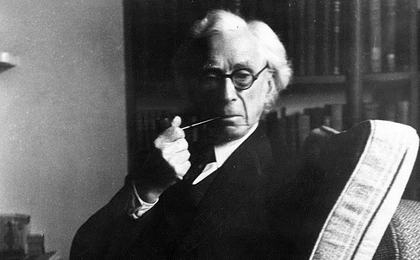
Bertrand Russell
Bertrand Russell is important to Truth By Reason because he joined logic, scepticism, anti-dogmatism and public moral concern.
Read thinker profileThinkers
Profiles of people who changed, challenged, shaped, improved, or distorted human thinking. This section includes philosophers, scientists, sceptics, psychologists, religious figures, political thinkers, reformers and others whose ideas affected belief, ethics, reasoning, society or conduct.
Inclusion does not mean approval. Each profile should examine contribution, influence, criticism, limitations and consequences.
Bertrand Russell is important to Truth By Reason because he joined logic, scepticism, anti-dogmatism and public moral concern.
Read thinker profile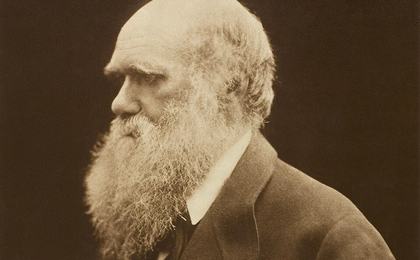
Charles Darwin is important to Truth By Reason because his work transformed human understanding of life, species, origins and humanity’s place in nature.
Read thinker profileThe third head of the Stoic school and its principal early system-builder.
Read thinker profileSuccessor to Zeno and an important early defender of Stoicism, best known for the Hymn to Zeus.
Read thinker profileConfucius was an ancient Chinese teacher and thinker whose teachings became foundational to Confucian ethics, education and political thought.
Read thinker profile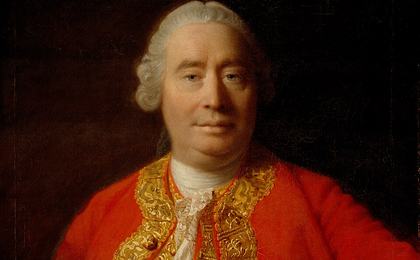
David Hume is important to Truth By Reason because he challenged weak claims about miracles, causation, religion and certainty through sceptical and empirical reasoning.
Read thinker profileDoreen Valiente was an influential Wiccan priestess and writer who helped shape major ritual texts and the public identity of modern Wicca.
Read thinker profileA former enslaved person who became a major Stoic teacher of freedom, responsibility and disciplined judgement.
Read thinker profileGerald Gardner was the principal public founder and promoter of modern Wicca in twentieth-century Britain.
Read thinker profileLaozi is the traditional author associated with the Dao De Jing and one of the foundational figures of Taoism.
Read thinker profileMahavira is regarded in Jainism as the twenty-fourth Tirthankara and the central teacher associated with the historical formation of the present Jain community.
Read thinker profileRoman emperor whose private reflections, now called the Meditations, explore duty, mortality and self-command.
Read thinker profileMargot Adler was an American journalist and Pagan writer whose Drawing Down the Moon became an influential survey of modern Paganism in the United States.
Read thinker profileMencius was an influential Confucian philosopher who argued that human beings possess natural beginnings of compassion and moral virtue that require cultivation.
Read thinker profileA Roman Stoic teacher who treated philosophy as training for ethical conduct rather than abstract study alone.
Read thinker profilePlato was a student of Socrates, founder of the Academy and one of the most influential philosophers in the Western tradition.
Read thinker profileRoman Stoic philosopher, statesman and writer whose works examine time, death, anger, wealth and virtue.
Read thinker profile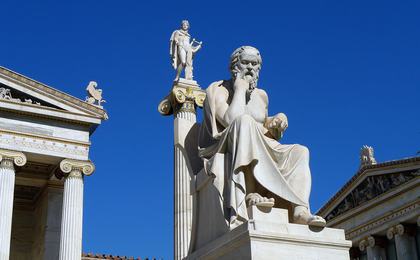
Socrates is important to Truth By Reason because he represents disciplined questioning, the examination of assumptions, and the idea that untested beliefs may be dangerous.
Read thinker profileStarhawk is an influential modern Pagan writer, ritualist and activist associated with Goddess spirituality, Reclaiming witchcraft, ecology and social action.
Read thinker profile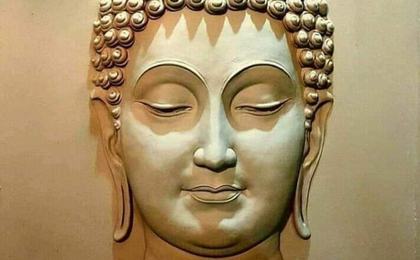
The Buddha is important to Truth By Reason because his teaching placed suffering, craving, impermanence and mental discipline at the centre of human inquiry.
Read thinker profileUmasvati, also called Umasvami, is the Jain philosopher associated with the Tattvartha Sutra, an influential systematic presentation of Jain doctrine.
Read thinker profileFounder of the Stoic school, which began teaching in Athens around the beginning of the third century BCE.
Read thinker profileZhuangzi was an influential Daoist philosopher whose associated text uses stories and paradox to question certainty, rigid distinctions and conventional values.
Read thinker profile