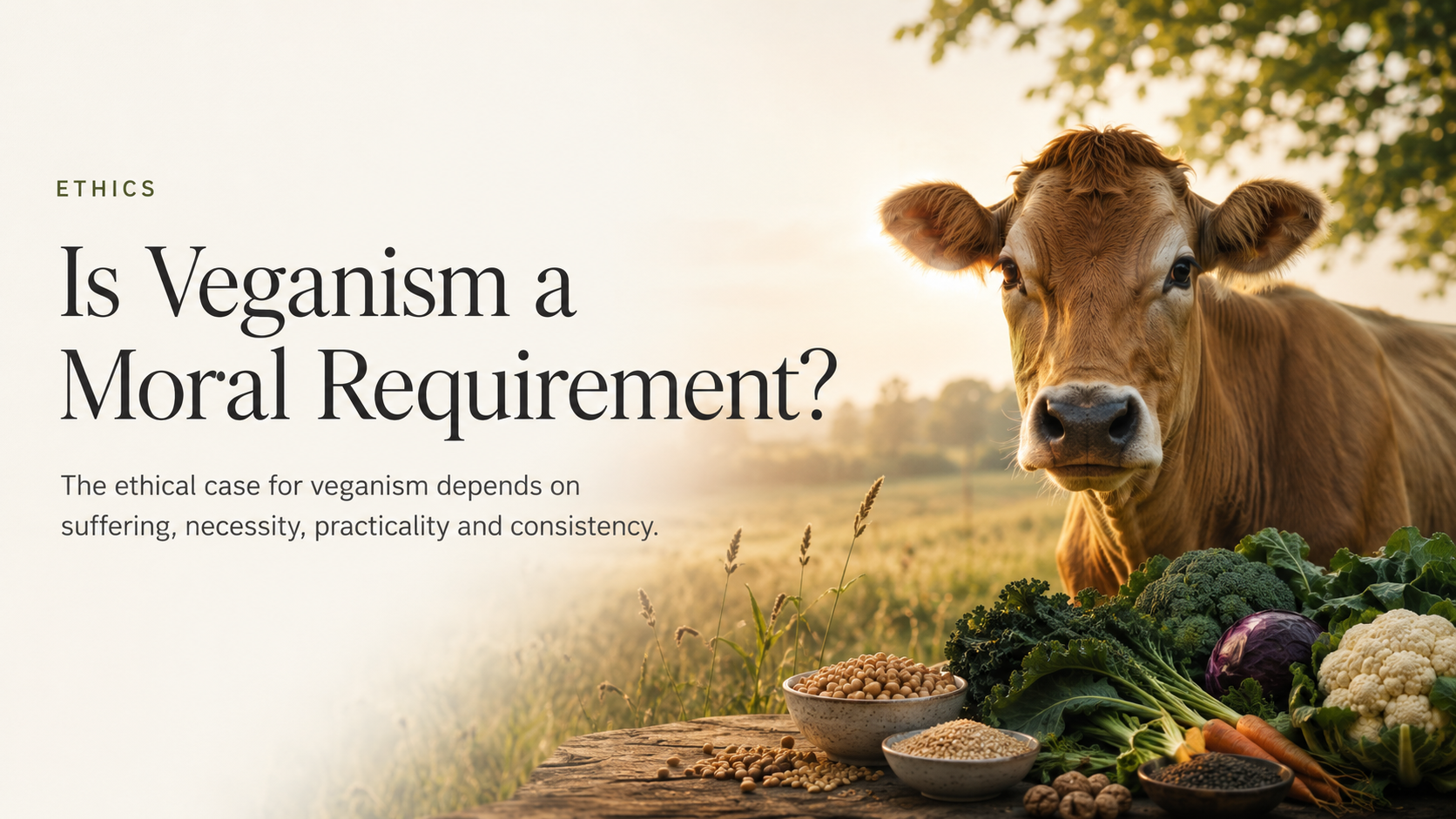
Veganism is often discussed emotionally, defensively or as a matter of identity. A reasoned approach starts with simpler questions: can animals suffer, is their suffering morally relevant, and when is harm necessary?
If animal products cause serious suffering and death, and if many people can avoid them without comparable harm, then veganism becomes a serious moral question. It cannot be dismissed merely because animal use is traditional, normal or pleasurable.
However, moral judgement must also consider context. People differ in health, access, poverty, knowledge, culture and dependence. The strongest ethical question is not whether every person is equally blameworthy, but whether avoidable harm should be reduced where reasonably possible.
Evidence notes
Evidence includes animal sentience research, farming practices, nutrition, environmental effects, availability of alternatives and practical consequences.
Ethical questions
When taste, habit or convenience conflicts with serious animal suffering, what reason is strong enough to justify the harm?
Conclusion
Veganism is not merely a lifestyle label. It is a serious ethical challenge about avoidable harm, consistency and the moral status of animals.