What We Find to Be True
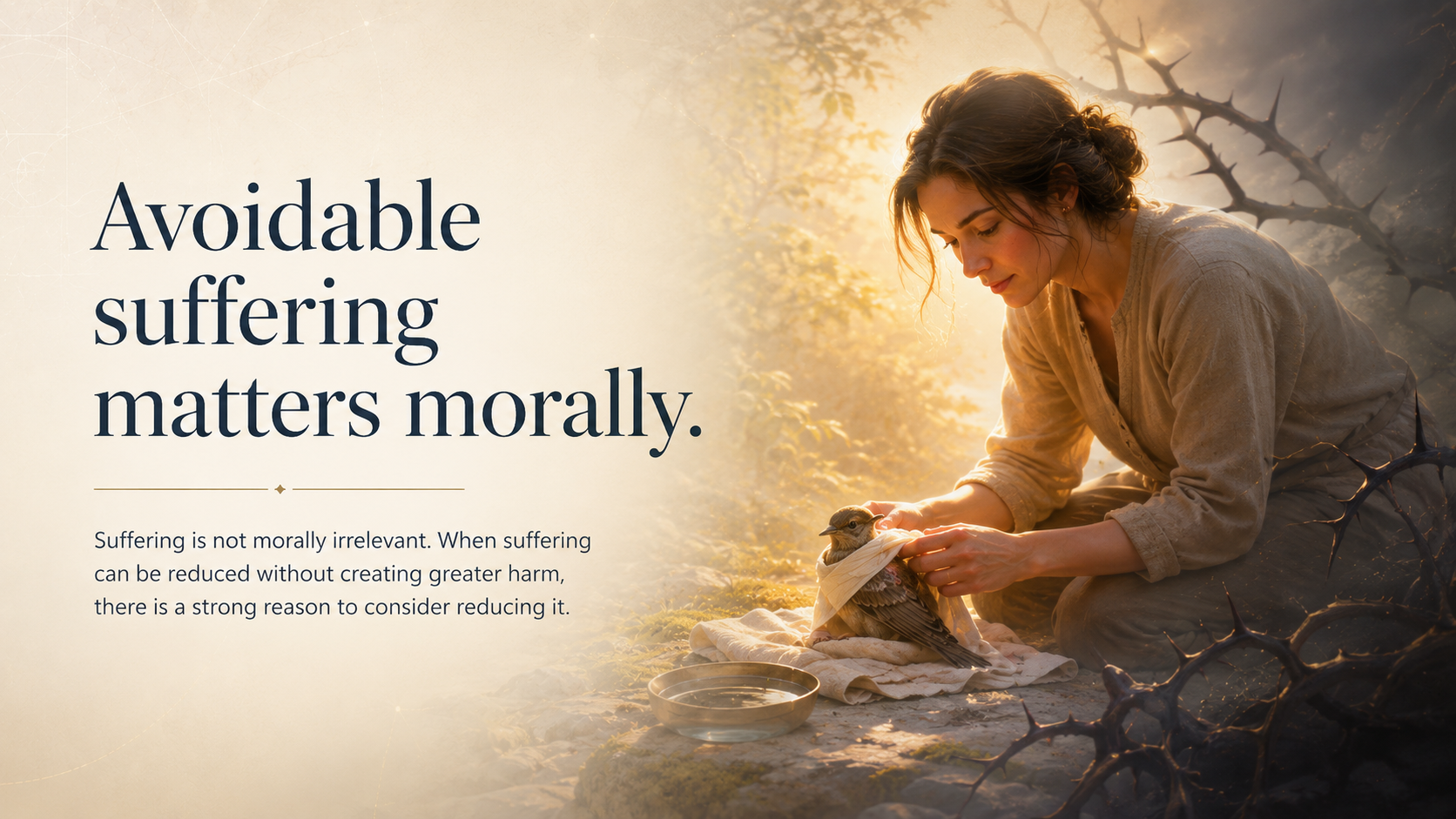
Avoidable suffering matters morally.
Suffering is not morally irrelevant. When suffering can be reduced without creating greater harm, there is a strong reason to consider reducing it.
Evidence summary
Suffering is a direct feature of conscious experience. Pain, fear, distress, grief, hunger, confinement, humiliation and severe anxiety are not abstract ideas to the beings who experience them. They are lived realities. This applies most clearly to humans, but it also applies to many non-human animals capable of pain, fear and distress.
Across moral systems, legal systems and ordinary human relationships, suffering is treated as significant. We protect children from abuse, patients from unnecessary pain, prisoners from torture, workers from dangerous conditions, and animals from some forms of cruelty. Even where societies disagree about moral theory, they often recognise that suffering counts for something.
The word avoidable is important. Not all suffering can be removed, and some hardship may be connected with learning, medical treatment, justice, protection or long-term benefit. But where suffering is unnecessary, excessive, careless, cruel, or caused for trivial reasons, it becomes morally serious.
Reasoning summary
If a being can suffer, then its experience can go badly for it. To say suffering matters morally is to say that this negative experience gives us at least some reason for concern. It does not automatically settle every moral question, but it cannot honestly be ignored.
Reasoning from suffering does not require a supernatural command. It begins with the reality that conscious beings can be harmed. If an action causes suffering, and that suffering is avoidable, and preventing it does not cause greater harm, then there is a rational moral reason to prevent or reduce it.
This finding also connects personal ethics with public policy. War, poverty, cruelty to animals, environmental destruction, coercive institutions and abusive belief systems all matter partly because they create or excuse suffering.
Counterarguments
One counterargument is that morality cannot be based only on suffering. This is reasonable. Truth, freedom, justice, dignity, loyalty and meaning may also matter. Reducing suffering is not the only moral concern.
However, saying suffering is not the only moral concern is different from saying suffering does not matter. The finding here is not that suffering reduction solves every moral problem. It is that avoidable suffering carries moral weight and should not be dismissed.
Another counterargument is that some suffering may produce growth, discipline or social order. Sometimes hardship may have value. But this does not justify unnecessary suffering, cruelty, neglect or harm that is defended merely by tradition, convenience, pleasure or profit.
Ethical consequences
If avoidable suffering matters morally, then many areas of life deserve examination: how humans treat animals, how governments justify war, how institutions treat vulnerable people, how families treat children, how economies treat workers, and how belief systems treat outsiders or dissenters.
This finding does not command a single lifestyle or political programme. It creates a moral test: when suffering is caused, ask whether it is necessary, proportionate, justified, and whether a less harmful alternative exists.
Conclusion
Truth By Reason finds this to be a high-confidence practical truth: avoidable suffering matters morally.
The exact response may depend on context, but suffering should not be treated as irrelevant when reasoning about ethics, policy, belief, behaviour or responsibility.